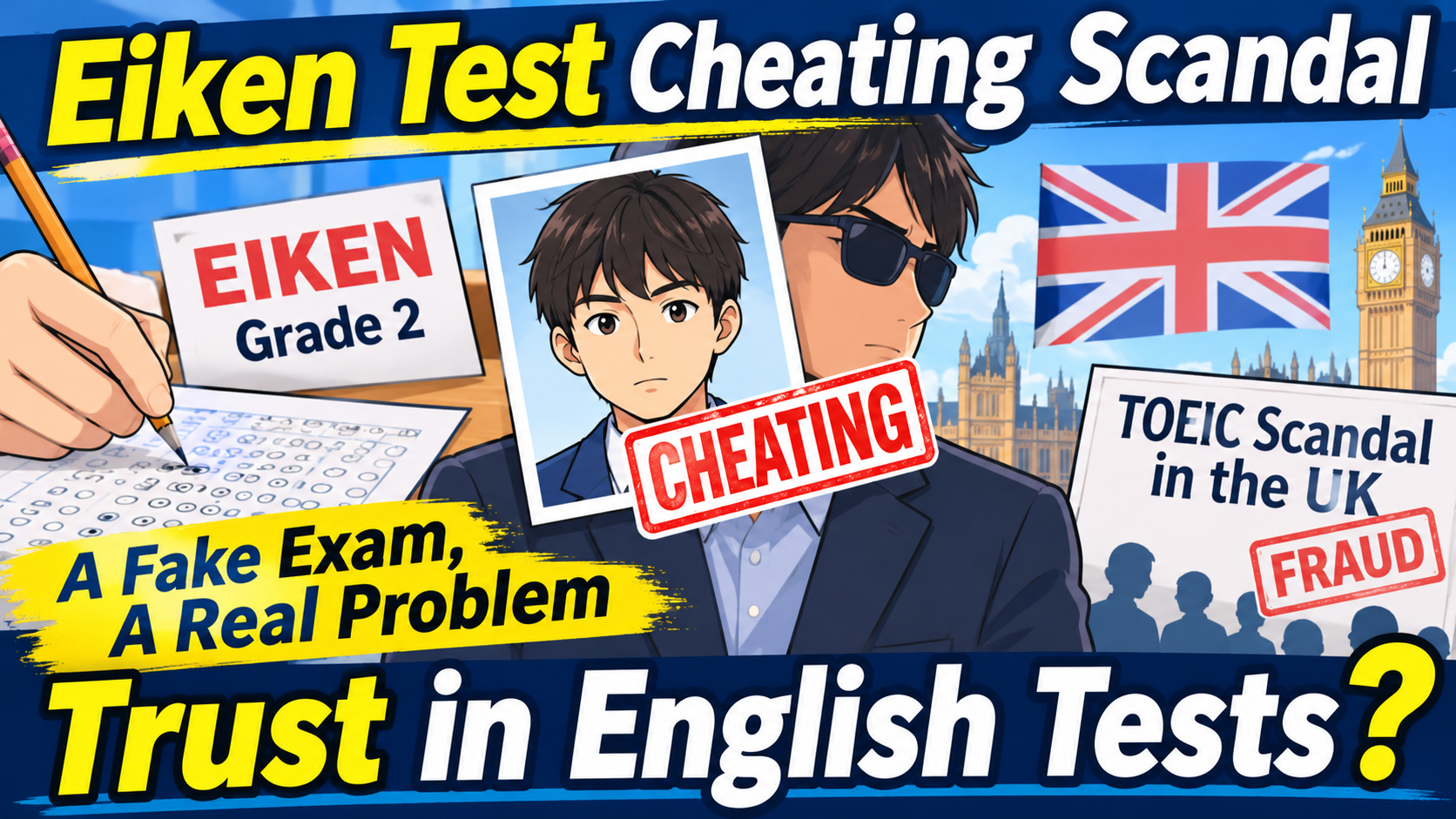


今回は、塾講師の「替え玉受験」不正に関する記事です。
【事件の概要】
塾の教え子(大学受験生)に成り済まして英検を受け出願したとして、元講師の男性(35)に対し、拘禁刑2年、執行猶予4年(求刑拘禁刑2年)の判決が言い渡されました。
昨年9月、教え子の受験生の代わりに英検2級を受験し、英検結果や教え子と自分の顔写真を合成した画像を使って入試に出願したところ、合格後に家族が当該事実を発見・確認し、大学側に連絡をして合格が取り消されました。
教え子を早く合格させ業務負担を軽くしようとしたことが犯行動機で、金銭授受等はなかった模様です。
【Einglish】
Recently, a serious case of cheating in a university entrance examination came to light in Japan. A former cram school teacher took the Eiken test on behalf of one of his students and passed Grade 2 under the student’s name. He then used the result to help the student get into a university. When applying, he submitted a photo that blended his face with the student’s, created with generative AI, so that no one would notice the difference. The student was accepted, but his admission was later canceled after his family noticed that the face on his student ID card did not look like him.
The teacher said that he did not want his student to fail and that taking the test himself was easier than teaching the student. Whatever his reasons, what he did was clearly wrong. In October 2026, he received a two-year prison sentence, suspended for four years.
This case raises an important question: How can universities trust the results of outside English tests? Many universities allow students to use scores from tests such as Eiken and TOEIC as part of their entrance examinations. This system can be useful because it gives students another way to show their English ability. However, it also creates a risk if the identity of the test taker is not carefully verified.
A similar problem occurred in the United Kingdom in 2014. A BBC program reported widespread cheating in TOEIC tests used for visa applications. Some people took tests for others, while some test supervisors read out the answers to candidates. As a result, about 35,000 student visas were revoked. Later, it was reported that many students may have been wrongly accused. This scandal showed how serious the problem could become when English test results are not reliable, and how important it is that checks are also fair.
These cases teach us that English tests are not just about language ability. They are also about trust and fairness. Universities and test organizations should improve identity checks and make better use of technology. At the same time, they should avoid making the process too difficult for honest students.
Generative AI can be a useful tool for learning and communication. However, it can also make cheating easier. We need to use new technology wisely and protect the value of education. Without trust in test results, students who work hard may lose fair opportunities.

コメント