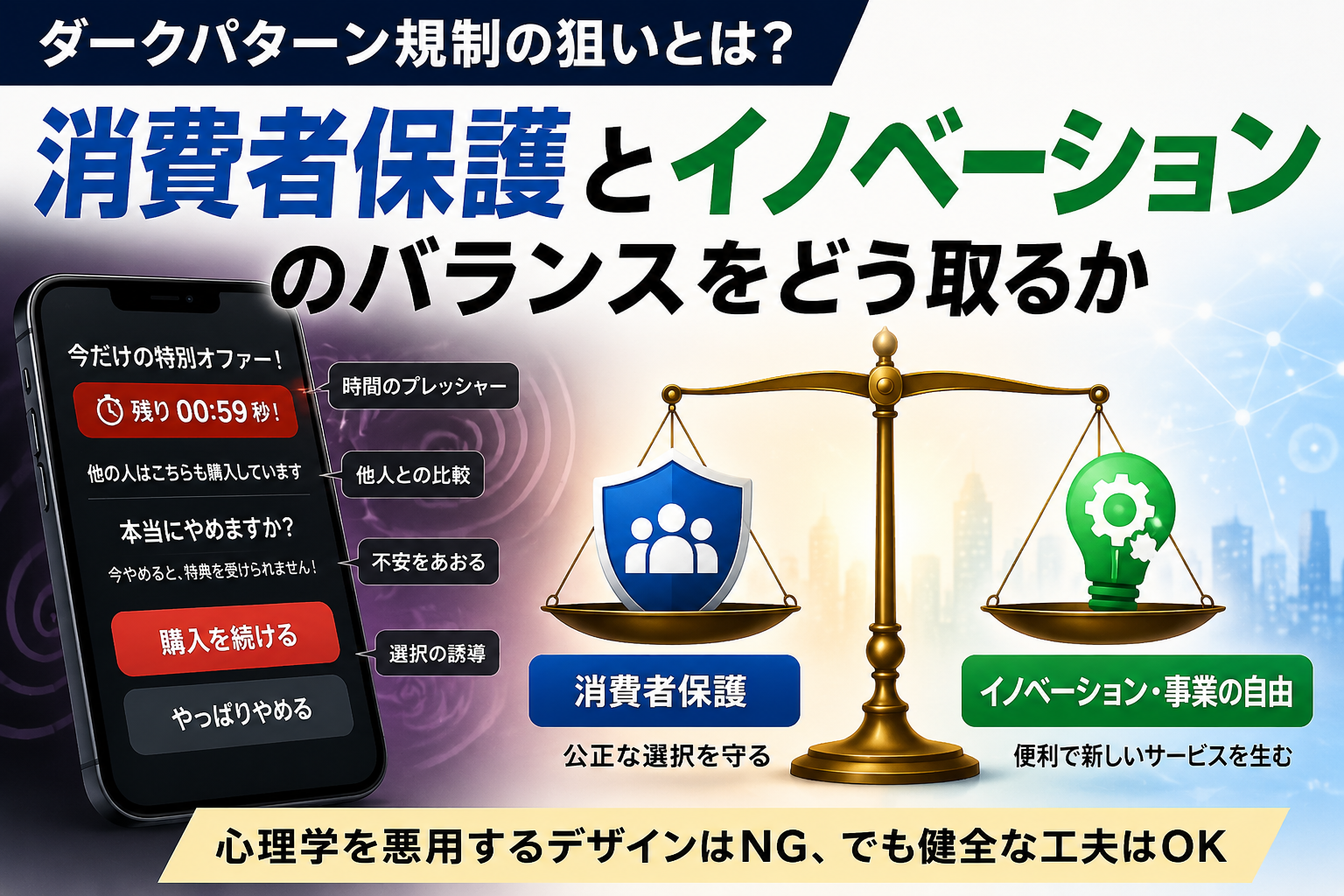


今回は、日経新聞の記事(ダークパターンへ法規制案)を題材にします。
今般、消費者庁から「中間とりまとめ案」が示されており、ウェブサイトのデザインで巧妙に消費者を誘導する「ダークパターン」への法規制の導入が見込まれています。
健全な取引により消費者が得られる利便性を最大限に確保しつつ、悪質な取引に焦点を当てて対応を強化することを基本とし、消費者保護と取引適正化の均衡を確保する必要がある。
[ デジタル取引・特定商取引法等検討会中間取りまとめ(案)基本的視点 ]
【English】
The Japanese government is planning new rules for “dark patterns” in online shopping. Dark patterns are website designs that push people to make choices they may not really want. At first, some people may think that the government wants to ban all of these designs. However, the real goal is more balanced than that.
The new proposal tries to protect consumers while still allowing companies to create useful and convenient online services. The report says that honest businesses should not face unnecessary restrictions. It is acceptable for a website to recommend products as long as a confirmation page is displayed before placing an order. The government aims to focus only on harmful practices that unfairly influence consumers’ decisions.
Another important point is that the definition of dark patterns is rather broad. It includes not only false information but also designs that guide, trick, pressure, or manipulate people into making choices that are not in their best interests. This means that even if a website does not tell a lie, it may still be considered problematic if it takes unfair advantage of the way people think.
This idea is closely related to behavioral economics, which studies how people actually make decisions. For example, people often keep the default option because changing it takes extra effort.
They may also feel pressure when they see messages such as “Only one item left!” or “This offer ends in five minutes!” These designs use human psychology to influence decisions.Pressuring consumers with unnecessary urgency will likely be targeted by regulations.
The challenge is determining where to draw the line with subtle marketing. Businesses naturally want to attract customers, but they should not misuse psychological techniques to reduce consumers’ freedom of choice.
As online services become more advanced, especially with AI creating personalized websites for each user, this issue will become even more important. The real question is not whether technology should be used, but how it can be used fairly and ethically. Finding the right balance between consumer protection and business innovation may become one of the biggest challenges in the digital age.
コメント