

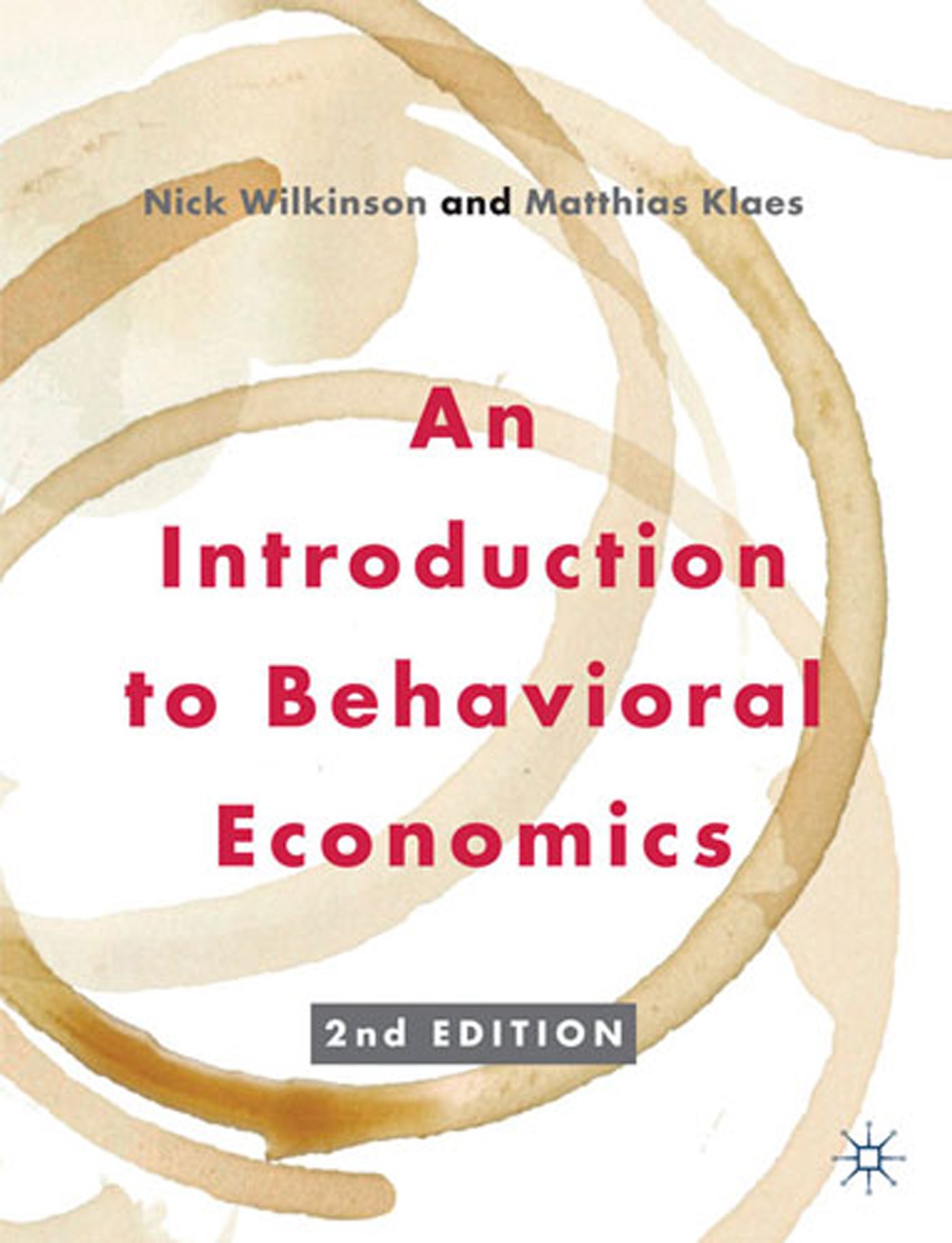
今回の記事は、現在読んでいる”An Introduction to Behavioral Economics”が題材です。

[English]
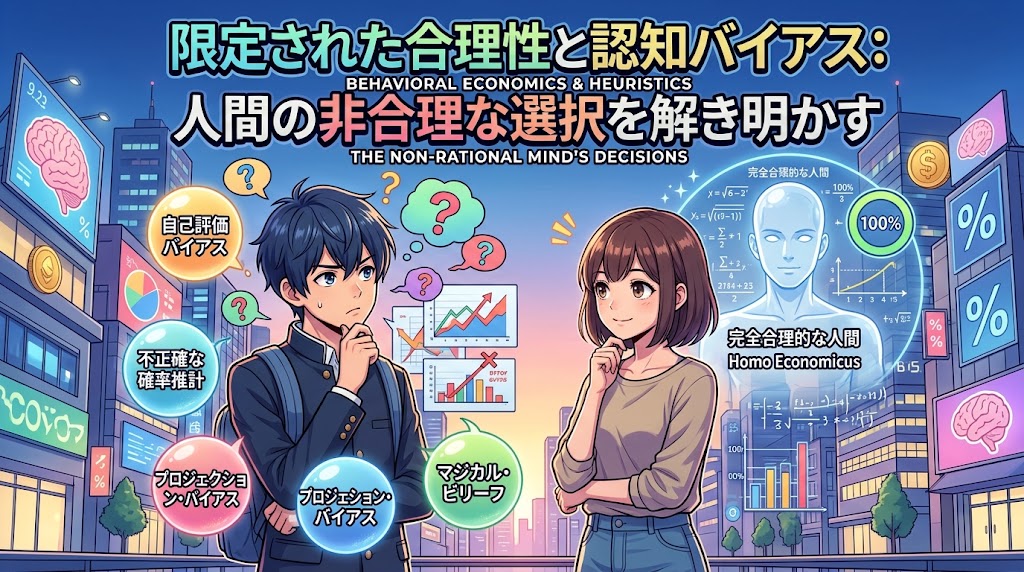
We like to think that we make careful, logical decisions. Behavioral economics tells a different story. Our brains has its limits. We don’t have unlimited time, and we can’t process every piece of information. This idea is called “bounded rationality.” To decide quickly, we use heuristics, which are mental shortcuts.
These shortcuts are useful, but they can lead to cognitive biases, or patterns of thinking that pull us away from rational choices. Let’s look at four of them.
1. Self-Evaluation Bias
Self-evaluation bias means judging our own abilities or future results in a way that does not match the facts. One example is overconfidence. Another is the “better-than-average effect.” In surveys, most drivers say they are better than the average driver, which is mathematically impossible. People often overestimate how much they know and how accurate their predictions are.
2. Incorrect Probability Estimation
Calculating probability in our heads takes a lot of effort, so we rely on gut feelings. We judge by how typical or how easily we can remember an example. Suppose a coin lands on heads five times in a row. Many people feel that tails is now “due.” This is called the gambler’s fallacy because the chance getting tails is still fifty percent.
3. Projection Bias
Projection bias is the mistake of predicting our future in light of how we feel right now.If we go grocery shopping when we are hungry, we may fill our cart with snacks that we will not want after dinner. We simply cannot imagine being full. Our current feelings are so strong that they blind us to how our tastes might change in the future.
4. Magical Belief
Magical belief means believing that two events are connected when there is no real cause and effect. It is closely related to the illusion of control, the feeling that our actions can influence things that are actually random. A gambler who blows on the dice, or a fan who wears a “lucky” shirt to help the team win, is a familiar example.
These biases rarely work alone. Overconfidence can make us ignore the real odds, and strong feelings can make us believe in luck. Knowing about these mental traps will not make us perfect, but it is the first step toward making better decisions.

コメント